 Add to Chrome
 Add to Firefox
 Add to Edge
CER-HV: A CER-Based Human-in-the-Loop Framework for Cleaning Datasets Applied to Arabic-Script HTR
Jan 23, 2026
Handwritten text recognition (HTR) for Arabic-script languages still lags behind Latin-script HTR, despite recent advances in model architectures, datasets, and benchmarks. We show that data quality is a significant limiting factor in many published datasets and propose CER-HV (CER-based Ranking with Human Verification) as a framework to detect and clean label errors. CER-HV combines a CER-based noise detector, built on a carefully configured Convolutional Recurrent Neural Network (CRNN) with early stopping to avoid overfitting noisy samples, and a human-in-the-loop (HITL) step that verifies high-ranking samples. The framework reveals that several existing datasets contain previously underreported problems, including transcription, segmentation, orientation, and non-text content errors. These have been identified with up to 90 percent precision in the Muharaf and 80-86 percent in the PHTI datasets. We also show that our CRNN achieves state-of-the-art performance across five of the six evaluated datasets, reaching 8.45 percent Character Error Rate (CER) on KHATT (Arabic), 8.26 percent on PHTI (Pashto), 10.66 percent on Ajami, and 10.11 percent on Muharaf (Arabic), all without any data cleaning. We establish a new baseline of 11.3 percent CER on the PHTD (Persian) dataset. Applying CER-HV improves the evaluation CER by 0.3-0.6 percent on the cleaner datasets and 1.0-1.8 percent on the noisier ones. Although our experiments focus on documents written in an Arabic-script language, including Arabic, Persian, Urdu, Ajami, and Pashto, the framework is general and can be applied to other text recognition datasets.

From the Rock Floor to the Cloud: A Systematic Survey of State-of-the-Art NLP in Battery Life Cycle
Oct 31, 2025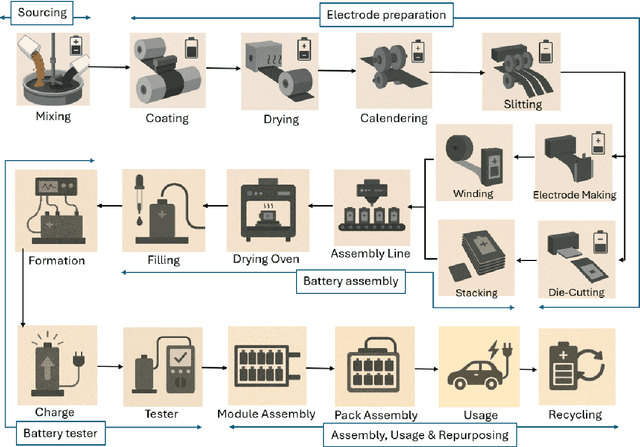
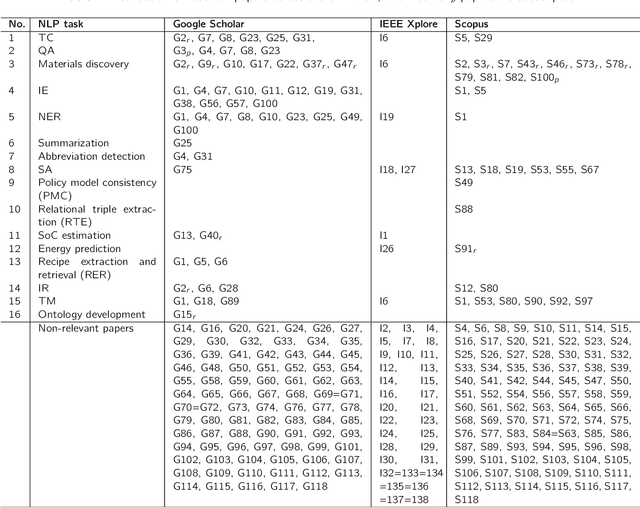
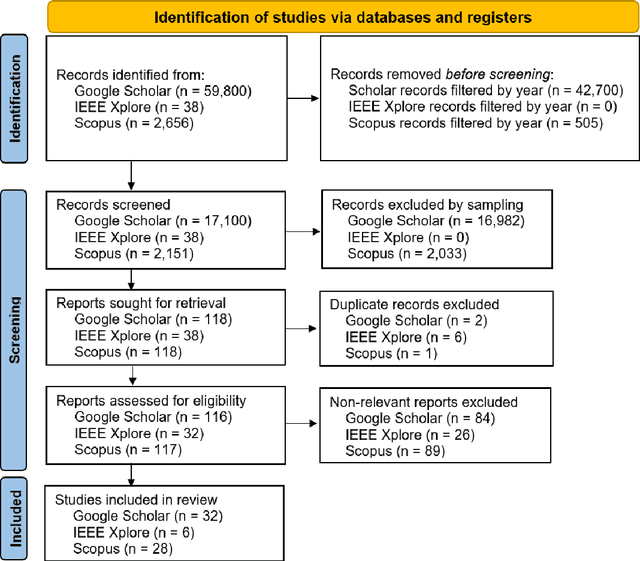
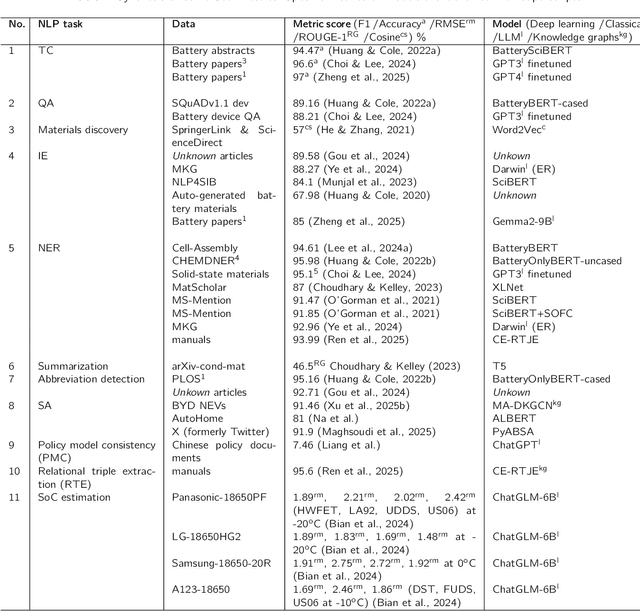
We present a comprehensive systematic survey of the application of natural language processing (NLP) along the entire battery life cycle, instead of one stage or method, and introduce a novel technical language processing (TLP) framework for the EU's proposed digital battery passport (DBP) and other general battery predictions. We follow the Preferred Reporting Items for Systematic Reviews and Meta-Analyses (PRISMA) method and employ three reputable databases or search engines, including Google Scholar, Institute of Electrical and Electronics Engineers Xplore (IEEE Xplore), and Scopus. Consequently, we assessed 274 scientific papers before the critical review of the final 66 relevant papers. We publicly provide artifacts of the review for validation and reproducibility. The findings show that new NLP tasks are emerging in the battery domain, which facilitate materials discovery and other stages of the life cycle. Notwithstanding, challenges remain, such as the lack of standard benchmarks. Our proposed TLP framework, which incorporates agentic AI and optimized prompts, will be apt for tackling some of the challenges.
Dual Orthogonal Guidance for Robust Diffusion-based Handwritten Text Generation
Aug 23, 2025Diffusion-based Handwritten Text Generation (HTG) approaches achieve impressive results on frequent, in-vocabulary words observed at training time and on regular styles. However, they are prone to memorizing training samples and often struggle with style variability and generation clarity. In particular, standard diffusion models tend to produce artifacts or distortions that negatively affect the readability of the generated text, especially when the style is hard to produce. To tackle these issues, we propose a novel sampling guidance strategy, Dual Orthogonal Guidance (DOG), that leverages an orthogonal projection of a negatively perturbed prompt onto the original positive prompt. This approach helps steer the generation away from artifacts while maintaining the intended content, and encourages more diverse, yet plausible, outputs. Unlike standard Classifier-Free Guidance (CFG), which relies on unconditional predictions and produces noise at high guidance scales, DOG introduces a more stable, disentangled direction in the latent space. To control the strength of the guidance across the denoising process, we apply a triangular schedule: weak at the start and end of denoising, when the process is most sensitive, and strongest in the middle steps. Experimental results on the state-of-the-art DiffusionPen and One-DM demonstrate that DOG improves both content clarity and style variability, even for out-of-vocabulary words and challenging writing styles.
Quo Vadis Handwritten Text Generation for Handwritten Text Recognition?
Aug 13, 2025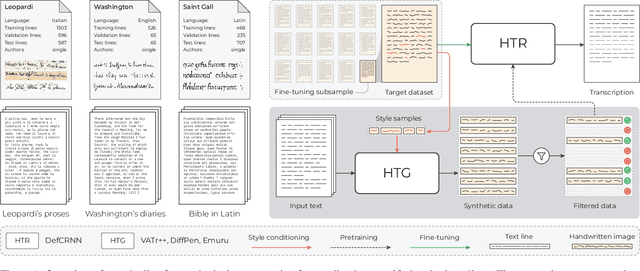
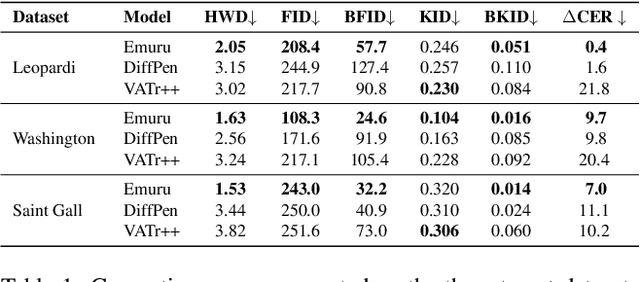
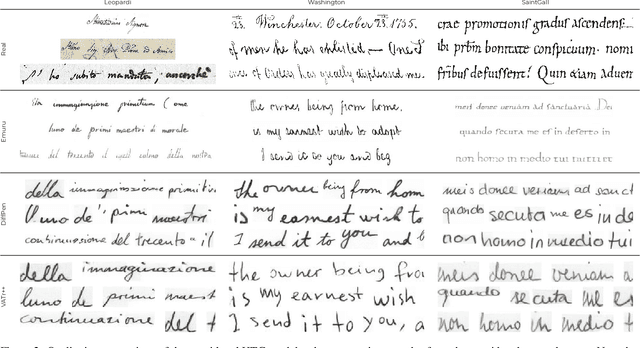
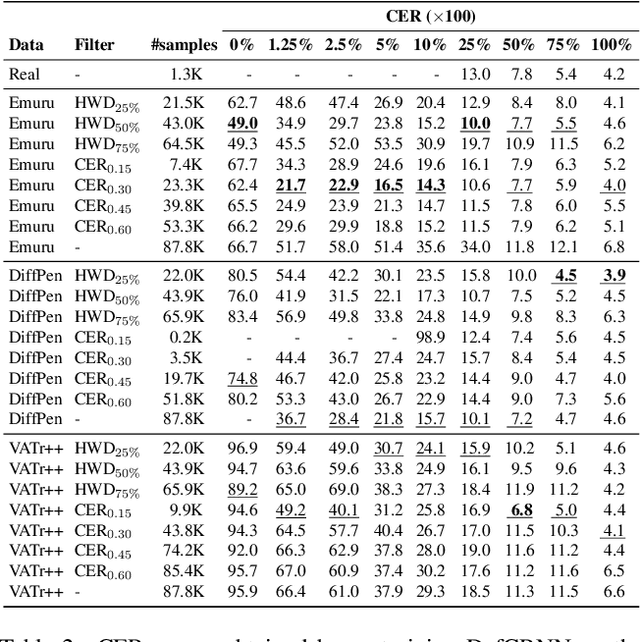
The digitization of historical manuscripts presents significant challenges for Handwritten Text Recognition (HTR) systems, particularly when dealing with small, author-specific collections that diverge from the training data distributions. Handwritten Text Generation (HTG) techniques, which generate synthetic data tailored to specific handwriting styles, offer a promising solution to address these challenges. However, the effectiveness of various HTG models in enhancing HTR performance, especially in low-resource transcription settings, has not been thoroughly evaluated. In this work, we systematically compare three state-of-the-art styled HTG models (representing the generative adversarial, diffusion, and autoregressive paradigms for HTG) to assess their impact on HTR fine-tuning. We analyze how visual and linguistic characteristics of synthetic data influence fine-tuning outcomes and provide quantitative guidelines for selecting the most effective HTG model. The results of our analysis provide insights into the current capabilities of HTG methods and highlight key areas for further improvement in their application to low-resource HTR.
Findings of MEGA: Maths Explanation with LLMs using the Socratic Method for Active Learning
Jul 16, 2025This paper presents an intervention study on the effects of the combined methods of (1) the Socratic method, (2) Chain of Thought (CoT) reasoning, (3) simplified gamification and (4) formative feedback on university students' Maths learning driven by large language models (LLMs). We call our approach Mathematics Explanations through Games by AI LLMs (MEGA). Some students struggle with Maths and as a result avoid Math-related discipline or subjects despite the importance of Maths across many fields, including signal processing. Oftentimes, students' Maths difficulties stem from suboptimal pedagogy. We compared the MEGA method to the traditional step-by-step (CoT) method to ascertain which is better by using a within-group design after randomly assigning questions for the participants, who are university students. Samples (n=60) were randomly drawn from each of the two test sets of the Grade School Math 8K (GSM8K) and Mathematics Aptitude Test of Heuristics (MATH) datasets, based on the error margin of 11%, the confidence level of 90%, and a manageable number of samples for the student evaluators. These samples were used to evaluate two capable LLMs at length (Generative Pretrained Transformer 4o (GPT4o) and Claude 3.5 Sonnet) out of the initial six that were tested for capability. The results showed that students agree in more instances that the MEGA method is experienced as better for learning for both datasets. It is even much better than the CoT (47.5% compared to 26.67%) in the more difficult MATH dataset, indicating that MEGA is better at explaining difficult Maths problems.
Agent-based Condition Monitoring Assistance with Multimodal Industrial Database Retrieval Augmented Generation
Jun 10, 2025Condition monitoring (CM) plays a crucial role in ensuring reliability and efficiency in the process industry. Although computerised maintenance systems effectively detect and classify faults, tasks like fault severity estimation, and maintenance decisions still largely depend on human expert analysis. The analysis and decision making automatically performed by current systems typically exhibit considerable uncertainty and high false alarm rates, leading to increased workload and reduced efficiency. This work integrates large language model (LLM)-based reasoning agents with CM workflows to address analyst and industry needs, namely reducing false alarms, enhancing fault severity estimation, improving decision support, and offering explainable interfaces. We propose MindRAG, a modular framework combining multimodal retrieval-augmented generation (RAG) with novel vector store structures designed specifically for CM data. The framework leverages existing annotations and maintenance work orders as surrogates for labels in a supervised learning protocol, addressing the common challenge of training predictive models on unlabelled and noisy real-world datasets. The primary contributions include: (1) an approach for structuring industry CM data into a semi-structured multimodal vector store compatible with LLM-driven workflows; (2) developing multimodal RAG techniques tailored for CM data; (3) developing practical reasoning agents capable of addressing real-world CM queries; and (4) presenting an experimental framework for integrating and evaluating such agents in realistic industrial scenarios. Preliminary results, evaluated with the help of an experienced analyst, indicate that MindRAG provide meaningful decision support for more efficient management of alarms, thereby improving the interpretability of CM systems.
Trends and Challenges in Authorship Analysis: A Review of ML, DL, and LLM Approaches
May 21, 2025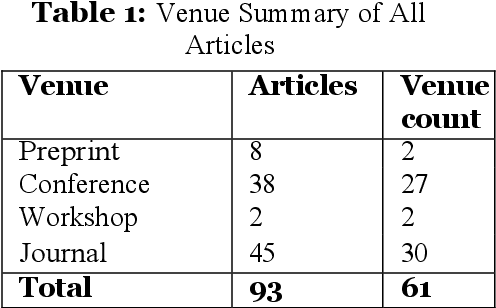
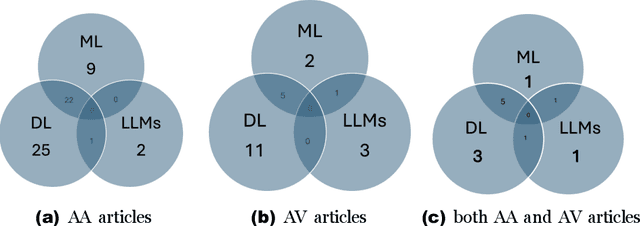
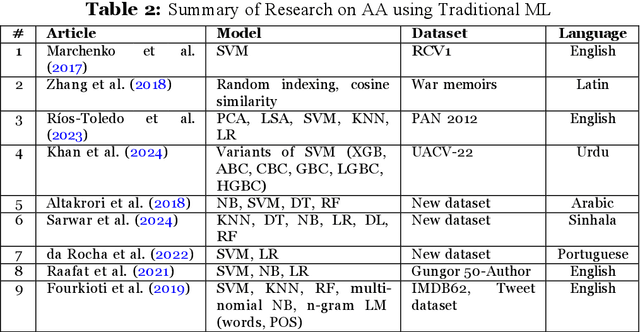
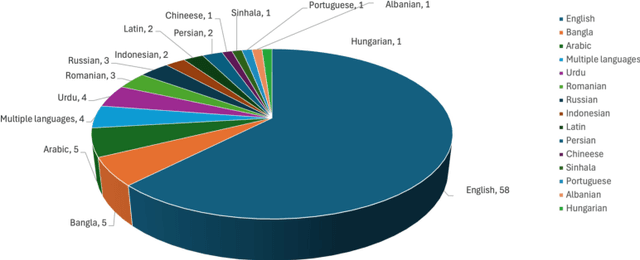
Authorship analysis plays an important role in diverse domains, including forensic linguistics, academia, cybersecurity, and digital content authentication. This paper presents a systematic literature review on two key sub-tasks of authorship analysis; Author Attribution and Author Verification. The review explores SOTA methodologies, ranging from traditional ML approaches to DL models and LLMs, highlighting their evolution, strengths, and limitations, based on studies conducted from 2015 to 2024. Key contributions include a comprehensive analysis of methods, techniques, their corresponding feature extraction techniques, datasets used, and emerging challenges in authorship analysis. The study highlights critical research gaps, particularly in low-resource language processing, multilingual adaptation, cross-domain generalization, and AI-generated text detection. This review aims to help researchers by giving an overview of the latest trends and challenges in authorship analysis. It also points out possible areas for future study. The goal is to support the development of better, more reliable, and accurate authorship analysis system in diverse textual domain.
Meta-Sparsity: Learning Optimal Sparse Structures in Multi-task Networks through Meta-learning
Jan 21, 2025This paper presents meta-sparsity, a framework for learning model sparsity, basically learning the parameter that controls the degree of sparsity, that allows deep neural networks (DNNs) to inherently generate optimal sparse shared structures in multi-task learning (MTL) setting. This proposed approach enables the dynamic learning of sparsity patterns across a variety of tasks, unlike traditional sparsity methods that rely heavily on manual hyperparameter tuning. Inspired by Model Agnostic Meta-Learning (MAML), the emphasis is on learning shared and optimally sparse parameters in multi-task scenarios by implementing a penalty-based, channel-wise structured sparsity during the meta-training phase. This method improves the model's efficacy by removing unnecessary parameters and enhances its ability to handle both seen and previously unseen tasks. The effectiveness of meta-sparsity is rigorously evaluated by extensive experiments on two datasets, NYU-v2 and CelebAMask-HQ, covering a broad spectrum of tasks ranging from pixel-level to image-level predictions. The results show that the proposed approach performs well across many tasks, indicating its potential as a versatile tool for creating efficient and adaptable sparse neural networks. This work, therefore, presents an approach towards learning sparsity, contributing to the efforts in the field of sparse neural networks and suggesting new directions for research towards parsimonious models.
DiffusionPen: Towards Controlling the Style of Handwritten Text Generation
Sep 09, 2024


Handwritten Text Generation (HTG) conditioned on text and style is a challenging task due to the variability of inter-user characteristics and the unlimited combinations of characters that form new words unseen during training. Diffusion Models have recently shown promising results in HTG but still remain under-explored. We present DiffusionPen (DiffPen), a 5-shot style handwritten text generation approach based on Latent Diffusion Models. By utilizing a hybrid style extractor that combines metric learning and classification, our approach manages to capture both textual and stylistic characteristics of seen and unseen words and styles, generating realistic handwritten samples. Moreover, we explore several variation strategies of the data with multi-style mixtures and noisy embeddings, enhancing the robustness and diversity of the generated data. Extensive experiments using IAM offline handwriting database show that our method outperforms existing methods qualitatively and quantitatively, and its additional generated data can improve the performance of Handwriting Text Recognition (HTR) systems. The code is available at: https://github.com/koninik/DiffusionPen.
Rethinking HTG Evaluation: Bridging Generation and Recognition
Sep 04, 2024The evaluation of generative models for natural image tasks has been extensively studied. Similar protocols and metrics are used in cases with unique particularities, such as Handwriting Generation, even if they might not be completely appropriate. In this work, we introduce three measures tailored for HTG evaluation, $ \text{HTG}_{\text{HTR}} $, $ \text{HTG}_{\text{style}} $, and $ \text{HTG}_{\text{OOV}} $, and argue that they are more expedient to evaluate the quality of generated handwritten images. The metrics rely on the recognition error/accuracy of Handwriting Text Recognition and Writer Identification models and emphasize writing style, textual content, and diversity as the main aspects that adhere to the content of handwritten images. We conduct comprehensive experiments on the IAM handwriting database, showcasing that widely used metrics such as FID fail to properly quantify the diversity and the practical utility of generated handwriting samples. Our findings show that our metrics are richer in information and underscore the necessity of standardized evaluation protocols in HTG. The proposed metrics provide a more robust and informative protocol for assessing HTG quality, contributing to improved performance in HTR. Code for the evaluation protocol is available at: https://github.com/koninik/HTG_evaluation.